
What are the Sustainable Development Goals?
The Sustainable Development Goals (SDGs), otherwise known as the Global Goals, are a universal call to action to end poverty, protect the planet and ensure that all people enjoy peace and prosperity.
The 2030 Agenda for Sustainable Development, adopted by all United Nations Member States in 2015, provides a shared blueprint for peace and prosperity for people and the planet, now and into the future. At its heart are the 17 Sustainable Development Goals (SDGs), which are an urgent call for action by all countries – developed and developing – in a global partnership. They recognize that ending poverty and other deprivations must go hand-in-hand with strategies that improve health and education, reduce inequality, and spur economic growth – all while tackling climate change and working to preserve our oceans and forests.
The SDGs build on decades of work by countries and the UN, including the UN Department of Economic and Social Affairs
- In June 1992, at the Earth Summit in Rio de Janeiro, Brazil, more than 178 countries adopted Agenda 21, a comprehensive plan of action to build a global partnership for sustainable development to improve human lives and protect the environment.
- Member States unanimously adopted the Millennium Declaration at the Millennium Summit in September 2000 at UN Headquarters in New York. The Summit led to the elaboration of eight Millennium Development Goals (MDGs) to reduce extreme poverty by 2015.
- The Johannesburg Declaration on Sustainable Development and the Plan of Implementation, adopted at the World Summit on Sustainable Developmentin South Africa in 2002, reaffirmed the global community’s commitments to poverty eradication and the environment, and built on Agenda 21 and the Millennium Declaration by including more emphasis on multilateral partnerships.
- At the United Nations Conference on Sustainable Development (Rio+20) in Rio de Janeiro, Brazil, in June 2012, Member States adopted the outcome document “The Future We Want” in which they decided, inter alia, to launch a process to develop a set of SDGs to build upon the MDGs and to establish the UN High-level Political Forum on Sustainable Development. The Rio +20 outcome also contained other measures for implementing sustainable development, including mandates for future programmes of work in development financing, small island developing states and more.
- In 2013, the General Assembly set up a 30-member Open Working Group to develop a proposal on the SDGs.
- In January 2015, the General Assembly began the negotiation process on the post-2015 development agenda. The process culminated in the subsequent adoption of the 2030 Agenda for Sustainable Development, with 17 SDGs at its core, at the UN Sustainable Development Summit in September 2015.
- 2015 was a landmark year for multilateralism and international policy shaping, with the adoption of several major agreements:
- Sendai Framework for Disaster Risk Reduction (March 2015)
- Addis Ababa Action Agenda on Financing for Development (July 2015)
- Transforming our world: the 2030 Agenda for Sustainable Development with its 17 SDGs was adopted at the UN Sustainable Development Summitin New York in September 2015.
- Paris Agreement on Climate Change (December 2015)
- Now, the annual High-level Political Forum on Sustainable Development serves as the central UN platform for the follow-up and review of the SDGs.
Today, the Division for Sustainable Development Goals (DSDG) in the United Nations Department of Economic and Social Affairs (UNDESA) provides substantive support and capacity-building for the SDGs and their related thematic issues, including water, energy, climate, oceans, urbanization, transport, science and technology, the Global Sustainable Development Report (GSDR), partnerships and Small Island Developing States. DSDG plays a key role in the evaluation of UN systemwide implementation of the 2030 Agenda and on advocacy and outreach activities relating to the SDGs. In order to make the 2030 Agenda a reality, broad ownership of the SDGs must translate into a strong commitment by all stakeholders to implement the global goals. DSDG aims to help facilitate this engagement.


These 17 Goals build on the successes of the Millennium Development Goals, while including new areas such as climate change, economic inequality, innovation, sustainable consumption, peace and justice, among other priorities. The goals are interconnected – often the key to success on one will involve tackling issues more commonly associated with another.
In 2015, world leaders agreed to 17 goals for a better world by 2030. These goals have the power to end poverty, fight inequality and stop climate change. Guided by the goals, it is now up to all of us, governments, businesses, civil society and the general public to work together to build a better future for everyone.
What is UNDP’s role?
The SDGs came into effect in January 2016, and they will continue to guide UNDP policy and funding until 2030. As the lead UN development agency, UNDP is uniquely placed to help implement the Goals through our work in some 170 countries and territories.
Our strategic plan focuses on key areas including poverty alleviation, democratic governance and peacebuilding, climate change and disaster risk, and economic inequality. UNDP provides support to governments to integrate the SDGs into their national development plans and policies. This work is already underway, as we support many countries in accelerating progress already achieved under the Millennium Development Goals.
Our track record working across multiple goals provides us with a valuable experience and proven policy expertise to ensure we all reach the targets set out in the SDGs by 2030. But we cannot do this alone.
Achieving the SDGs requires the partnership of governments, private sector, civil society and citizens alike to make sure we leave a better planet for future generations.
Background on the goals
The Sustainable Development Goals (SDGs) were born at the United Nations Conference on Sustainable Development in Rio de Janeiro in 2012. The objective was to produce a set of universal goals that meet the urgent environmental, political and economic challenges facing our world.
The SDGs replace the Millennium Development Goals (MDGs), which started a global effort in 2000 to tackle the indignity of poverty. The MDGs established measurable, universally-agreed objectives for tackling extreme poverty and hunger, preventing deadly diseases, and expanding primary education to all children, among other development priorities.
For 15 years, the MDGs drove progress in several important areas: reducing income poverty, providing much needed access to water and sanitation, driving down child mortality and drastically improving maternal health. They also kick-started a global movement for free primary education, inspiring countries to invest in their future generations. Most significantly, the MDGs made huge strides in combatting HIV/AIDS and other treatable diseases such as malaria and tuberculosis.
Key MDG achievements
- More than 1 billion people have been lifted out of extreme poverty (since 1990)
- Child mortality dropped by more than half (since 1990)
- The number of out of school children has dropped by more than half (since 1990)
- HIV/AIDS infections fell by almost 40 percent (since 2000)
The legacy and achievements of the MDGs provide us with valuable lessons and experience to begin work on the new goals. But for millions of people around the world the job remains unfinished. We need to go the last mile on ending hunger, achieving full gender equality, improving health services and getting every child into school beyond primary. The SDGs are also an urgent call to shift the world onto a more sustainable path.
The SDGs are a bold commitment to finish what we started, and tackle some of the more pressing challenges facing the world today. All 17 Goals interconnect, meaning success in one affects success for others. Dealing with the threat of climate change impacts how we manage our fragile natural resources, achieving gender equality or better health helps eradicate poverty, and fostering peace and inclusive societies will reduce inequalities and help economies prosper. In short, this is the greatest chance we have to improve life for future generations.
The SDGs coincided with another historic agreement reached in 2015 at the COP21 Paris Climate Conference. Together with the Sendai Framework for Disaster Risk Reduction, signed in Japan in March 2015, these agreements provide a set of common standards and achievable targets to reduce carbon emissions, manage the risks of climate change and natural disasters, and to build back better after a crisis.
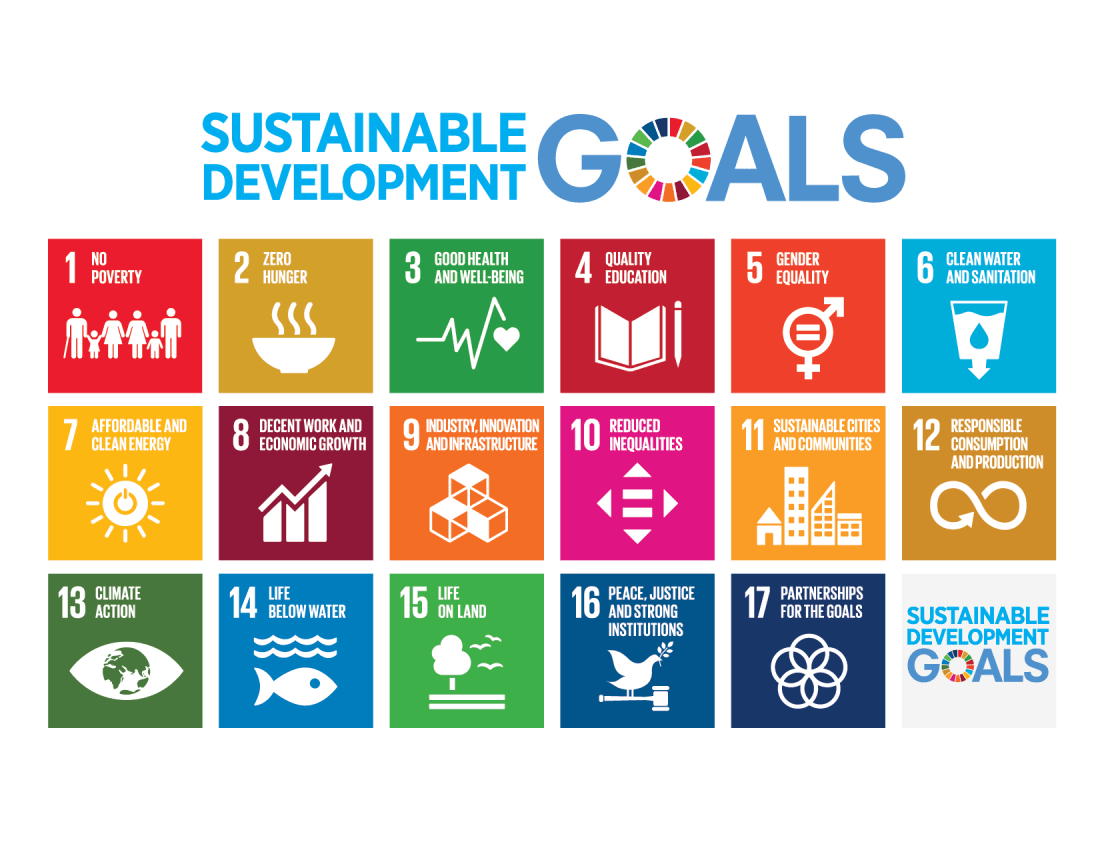
The SDGs are unique in that they cover issues that affect us all. They reaffirm our international commitment to end poverty, permanently, everywhere. They are ambitious in making sure no one is left behind. More importantly, they involve us all to build a more sustainable, safer, more prosperous planet for all humanity.

Sources: ” https://www.undp.org/content/undp/en/home/sustainable-development-goals.html
https://www.un.org/sustainabledevelopment/news/communications-material/
https://www.globalgoals.org/ ”
by Almoustapha Diakite (diakmusto2@gmail.com)
@Royalsafariphotohouse (Copyright: 2019).
#Niger #Niamey
 ROYAL SAFARI PHOTOHOUSE